AI for the Application-Data interface

The always-on AI data engineer for application schema changes

As application teams ship, Woven understands product-driven schema and semantic change at the source and translates it into review-ready data engineering work before drift and reactivity set in.

Works with GitHub, dbt, Snowflake, and Slack. No workflow changes required.

Talk to usStart now →SOC 2 compliance badge

Understands application schema changes

Triages based on model and usage impact
Drafts review-ready data engineering updates

How it works

Step 1: Understand the change

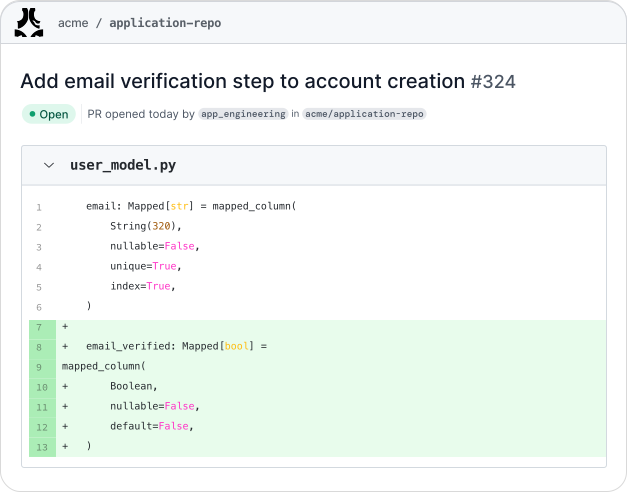
Woven reads application PRs and understands schema changes as they happen.

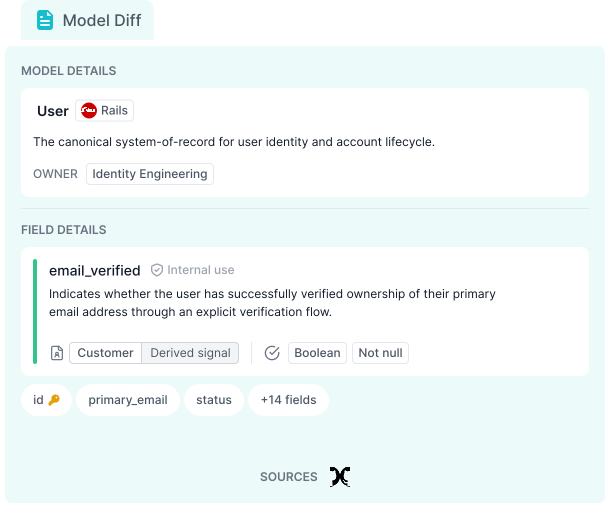
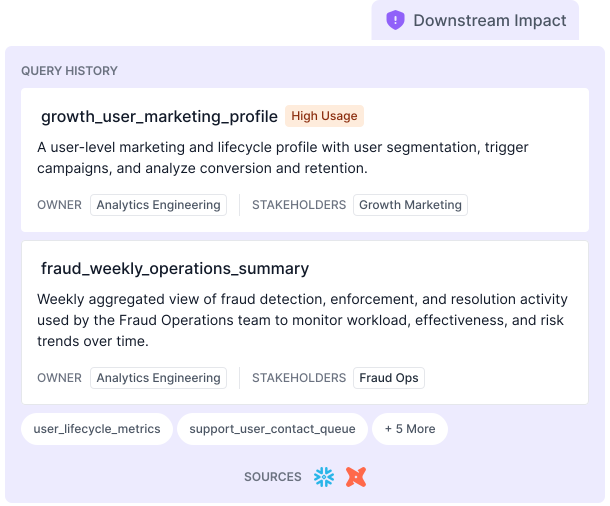
On every commit that introduces an application schema change, Woven figures out what changed, who owns it, and which downstream models and usage are affected – so data engineering decisions start with full context.

Screenshot of an application PR diff showing a schema change
An image of Woven's logo, representing Woven AI enriching your application code schema
Model diff metadataOwnership and intent metadataData usage metadata
Woven supports all the popular ORMs and frameworks and is extensible for custom integrations.
Try Woven locally (5-minute guide)

Step 2: Prepare the data work

Woven scopes and prepares the required downstream data engineering work.

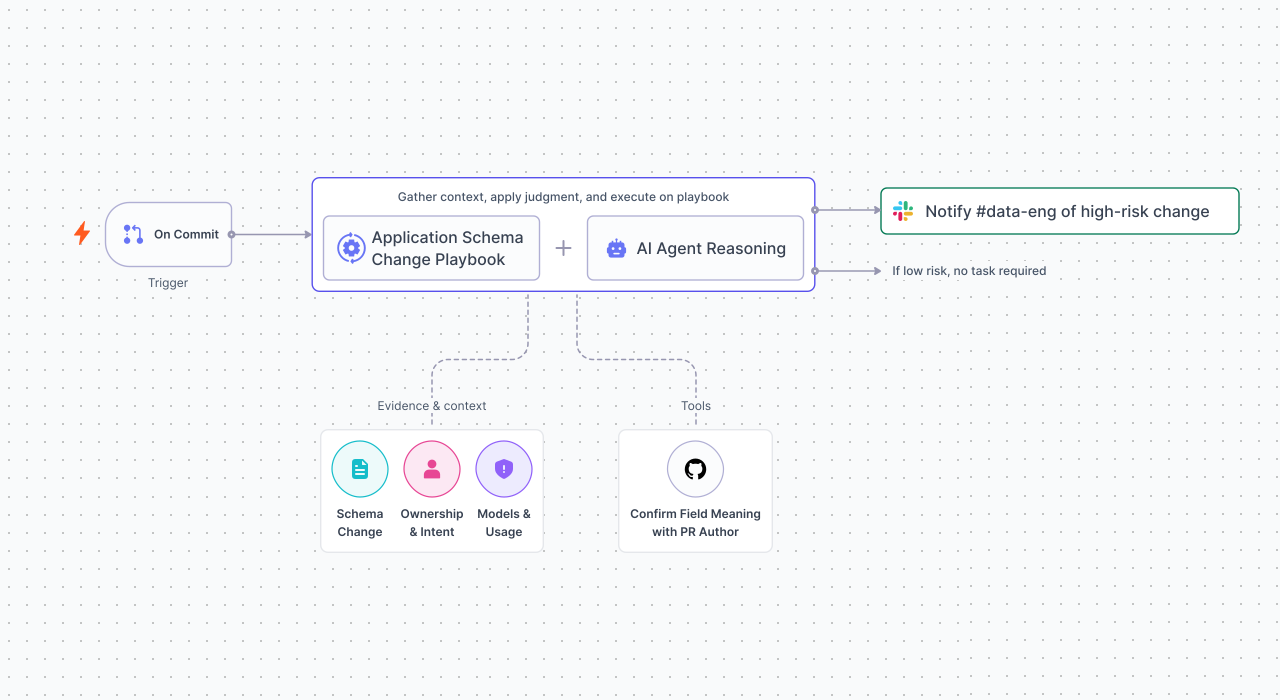
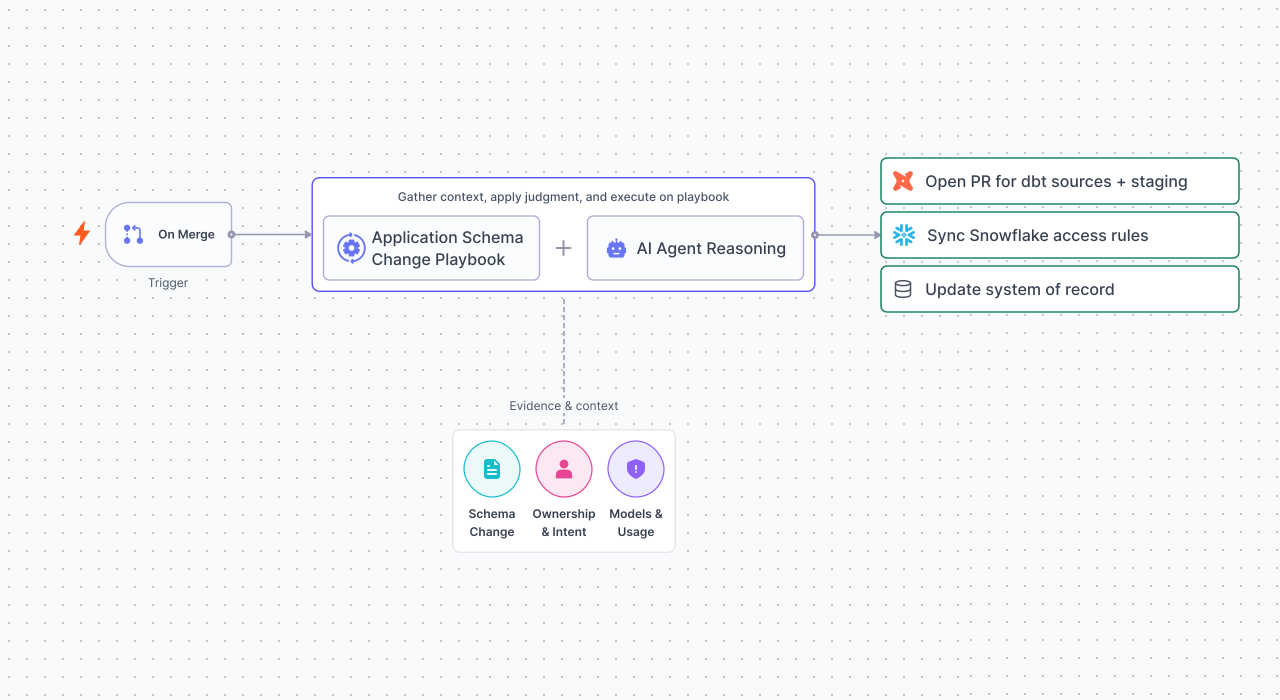
With the full change context resolved, Woven uses team playbooks to determine what data engineering work is required – updating dbt sources/staging, access or masking updates, escalating sensitive changes, or triggering downstream systems – all in a reviewable, approval-driven flow.

Woven is configurable by design – you decide what work it does and when.

Talk to Woven's founders

Step 3: Decide and propagate data work

Data engineers decide how and when the prepared data work propagates downstream.

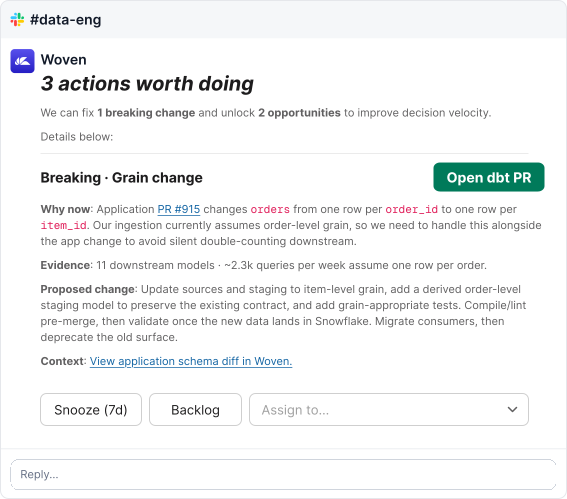
Woven batches review-ready data engineering work into a prioritized digest, so data engineers decide what to apply, defer, or ignore – letting data teams scale from a few changes to hundreds without alerts or coordination drag.

Slack notification with Woven suggestion

Boundaries & controls

Every Woven action is governed by your policies and review controls.

Woven only prepares change according to team-defined playbooks. All actions are explainable, reviewable, and reversible – ensuring safety even as change volume grows.

Nothing is applied automatically

All proposed updates are surfaced as reviewable artifacts (PRs, diffs, or change suggestions) that your team reviews and merges.

Nothing happens without context

Woven only drafts work when a genuine change signal is detected and always includes ownership, evidence, and impact context.

All behavior is team-defined

Pre-defined playbooks, escalation rules, and review controls reflect your team’s policies, not Woven defaults.

Failure is safe by default

If Woven is unavailable or misconfigured, nothing is blocked or altered, and your workflows continue uninterrupted.

Every decision is auditable

Every detection, draft, and proposal is traceable. You can see what was observed, why a change was drafted, and what evidence supports it – no black boxes.

Team outcomes

Features ship without downstream fallout. Data stays reliable as the product evolves.

By handling schema change at the point of delivery, Woven removes coordination overhead between application and data teams – so product changes land cleanly and downstream data continues to reflect the application.

Review prepared work instead of reacting to breakage.

  • Schema changes arrive with meaning, ownership, and downstream impact already established
  • Review prepared dbt and access updates, rather than chasing failures after deploy
  • Maintain data reliability without becoming a delivery bottleneck

Replace bespoke schema change glue with a single system.

  • Define schema change behavior once and apply it consistently across tools
  • Reduce bespoke scripts, workflows, and special cases
  • Extend schema change handling to modeling, ingestion, access control, and notifications as needs evolve

Build on top of stable foundations, not shifting schemas.

  • Source and staging layers update intentionally as application schemas change
  • Upstream drift no longer cascades into downstream breakage
  • Spend less time patching metrics after deploy and more time building trusted analytics

Ship features without downstream surprises.

  • No surprise follow-ups weeks after merge
  • Answer ownership or meaning questions once, in the PR where the change is made
  • Fewer data tickets, Slack pings, and retroactive fixes

Scale product change without scaling data overhead.

  • Application teams ship faster without increasing downstream breakage
  • Data teams deliver leverage through systems, not heroics
  • Data reliability holds as the product surface area expands

Identify and address sensitive data at the moment it’s introduced.

  • Schema changes are reviewed for sensitive data when they’re drafted, not after deployment
  • Policy-driven confirmations or escalations occur only when required and are always recorded
  • Access control and masking stay consistent with schema changes over time

Get started

Start with observation, then expand where it helps.

Begin with a two-week Schema Insights pilot that surfaces application schema changes in PRs without taking action. Application teams keep shipping as usual, while you selectively enable preparation and review workflows to validate impact before expanding further.

3-step integration

Step 1
Install GitHub App

Step 2
Merge CI Config PR

Step 3
Install Slack App

Try Woven for free

Woven takes ~20 minutes to implement for a Schema Insights pilot

Security & safety

Enterprise-level security with SOC 2 Type II certification

  • All code analysis runs within your CI/CD, ensuring full control
  • Only metadata is stored — no sensitive business data
  • "Bring Your Own Key" ensures maximum security for AI enrichment
  • Metadata is stored as code, preventing vendor lock-in
Visit our Trust Center
SOC 2 compliance badge

Trusted by security teams in leading enterprises

Only metadata used, bring your own OpenAI key, and SOC 2 Type II compliant

AICPA SOC 2 Badge

Get more value from your tools

Connect Woven to your tech stack for expanded capabilities

Trusted by security teams in leading enterprises

Only metadata used, bring your own OpenAI key, and SOC 2 Type II compliant

AICPA SOC 2 Badge

Get more value from your tools

Connect Woven to your tech stack for expanded capabilities

FAQs

How is Woven different from monitoring or observability tools?
Does Woven block merges or change AppEng workflows?
When and where does Woven run, and what triggers it?
What does Woven produce, where does it live, and who approves what?
How does Woven establish schema meaning and intent?
How does Woven decide when downstream work is required?
Which application schema sources does Woven support?
What data does Woven access and how is it secured?
How do we start safely, and what is Schema Change Discovery?
What if Woven is down or misconfigured?
Can Woven be used incrementally across teams and systems?

Let’s design the future of data engineering together.

Hire Woven to absorb continuous data change without adding headcount or operational load — so data stays aligned as the product and business evolves.

Jesse Kendrick PhotoKarthik Ravichandran Photo
Talk to us